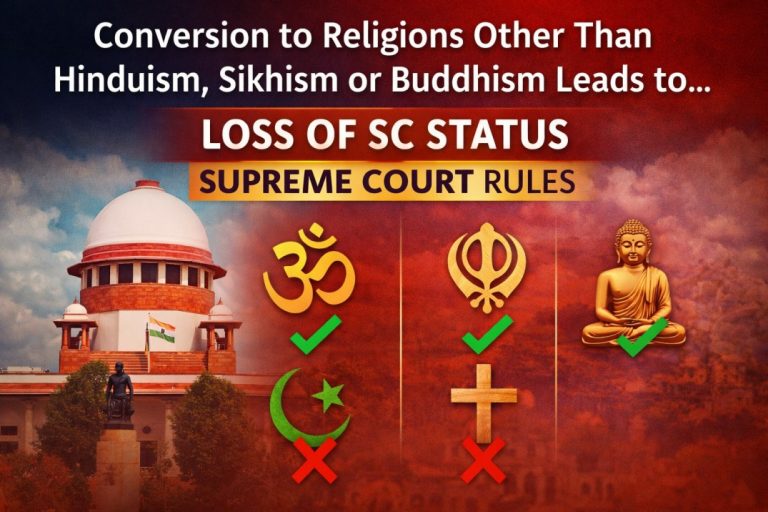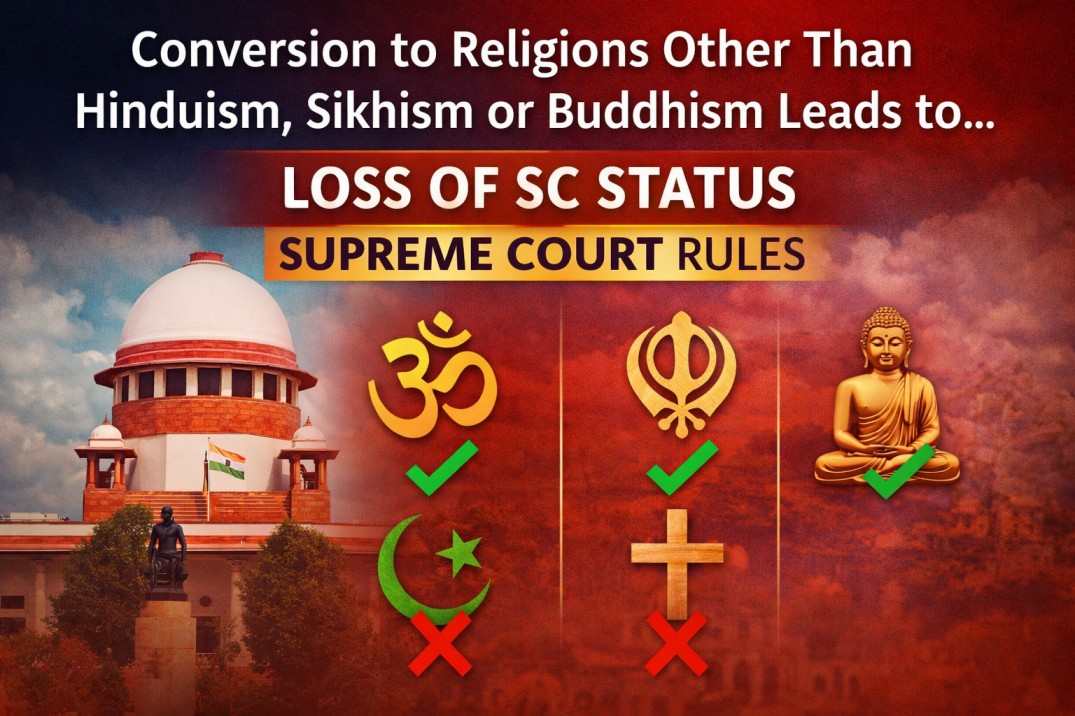
In a significant legal development, the Supreme Court of India has clarified that individuals who convert to religions other than Hinduism, Sikhism, or Buddhism will lose their Scheduled Caste (SC) status. The ruling came during a hearing focused on the interpretation of caste-based reservations and the relationship between religion and social identity.
SC Status Linked to Specific Religions
The Court emphasized that Scheduled Caste recognition is rooted in historical social discrimination within certain religious communities. Under the current legal framework, SC status was originally granted to Hindus and later extended to Sikhs and Buddhists.
However, individuals who convert to religions such as Islam or Christianity are not eligible to retain SC status under existing laws.
Constitutional Basis of the Ruling
The judgment reinforces the provisions of the Constitution (Scheduled Castes) Order, 1950, which governs the identification and rights of Scheduled Castes in India.
According to this order:
- SC status applies only to specific religious groups
- Conversion outside these groups leads to loss of eligibility
- Benefits such as reservations in education, jobs, and politics are withdrawn
The bench made it clear that voluntary conversion results in the loss of these constitutional benefits.
Impact on Reservation Benefits
With this clarification, individuals who convert to other religions will no longer be able to claim:
- Reservation in educational institutions
- Quotas in government employment
- Political representation benefits
This decision is expected to have a major impact on individuals from Dalit communities who convert seeking social or economic upliftment.
Ongoing Debate on SC Status After Conversion
The ruling adds momentum to the ongoing national debate on whether SC status should be extended to Dalits who convert to Christianity or Islam.
- Supporters argue that SC status is tied to religion-specific social structures
- Critics believe caste-based discrimination can continue even after conversion
This divide highlights the complexity of balancing legal frameworks with social realities.
Connection to Religious Conversion Laws
The observation by the Supreme Court of India comes at a time when multiple petitions related to religious conversion laws are under consideration.
These cases raise key constitutional questions, including:
- The extent of religious freedom
- The legality of anti-conversion laws
- The balance between personal liberty and state regulation
Conclusion
The latest clarification by the Supreme Court of India reaffirms the current constitutional position on Scheduled Caste status and religious conversion.
While the ruling strengthens the existing legal framework, it also reignites discussions on reform and inclusion. The issue remains a sensitive and evolving aspect of India’s legal and social landscape.
Stay informed on important legal developments and policy changes shaping India. Follow our platform for accurate updates, expert insights, and in-depth analysis.
About the Author